Llama Nanobides & COVID
Llama Component Becoming Major Medical Asset
By Ron Baird, Chair, RMLA Research Committee
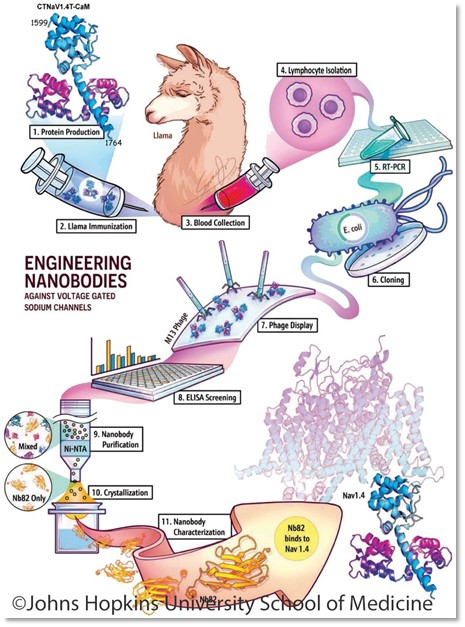
University researchers late in the last century made a startling discovery: llamas, other camelids, and some shark species produce “strange” diminutive antibodies one-fourth to one-half the size and perhaps a quarter of the weight of antibodies produced by other creatures. These unique cells are called “single-domain antibodies” or “nanobodies”.
First discovered and identified in camelids, nanobodies are fragments of antibodies, which recognize and bind to cell or virus surface markers called antigens. Whereas human antibodies are composed of molecule chains, only a much smaller single fragment of the camelid antibody is sufficient to recognize viral or bacterial antigens.
The many ways these particles, found in llama blood, are being applied in medicine hold the promise of major advances in disease detection, treatment, and improved quality of health for humans.
This unique attribute makes llama nanobodies an exciting research and development area. Nearly all articles about this research refer to “llama” nanobodies rather than of camelid. This may be because researchers prefer to draw blood (to extract the antibodies it contains) from docile, easily accessible llamas.
The concept of using antibodies to deliver medicines to diseased or defective organs has become a reality in recent years. But human antibodies, being much larger, have difficulty in many instances penetrating the shells of viral or bacterial cells.
Variously, medical researchers are employing llama nanobodies in the process of developing systems for medicines to be delivered exclusively to tumors, take stem cells to defective organs in efforts to revitalize them, and other applications.
Perhaps the latest clever utilization of llama nanobodies has been the creation of a machine to detect Covid. Aerosol scientists at Washington University in St. Louis have constructed a toaster-sized machine using llama nanobodies to detect as few as 7 to 35 viral particles of SARS-CoV-2 per cubic meter of air in as little as five minutes. Developed commercially, this device could be installed to detect the presence of COVID in airports, restaurants, grocery stores, offices, hospitals, and other public areas.
Aerosol scientists at Virginia Tech are known to be working on a detector of their own design. Creative minds will take this new application of llama nanobodies and apply it to the detection of other noxious viruses and bacteria in the future.
The Inca civilization considered llamas to be sacred, using them as messengers to the gods. These exciting medical uses of llamas – and other camelids – truly are making them medical messengers of improved health for humankind!
© Fall 2023 RMLA Journal
Like this article? Become a RMLA Member today!
